Reda Sadki
-
You cannot download a data centre: what does AI sovereignty mean for ministries of health?
A Q&A with The Geneva Learning Foundation’s Reda Sadki, based on his remarks on the panel “After World Labs: Is the Standalone AI Model Era Ending?”. What the panel asked On 3 October 2026, Reda Sadki joined an online panel convened by the AI for Developing Countries Forum as part of its weekly AI review.…
Written by

-
What does the Jevons Paradox mean for artificial intelligence in global health?
This Q&A with TGLF’s Reda Sadki is based on his remarks at the 26 September 2026 panel titled “Will Cheaper AI Automate Everything? The Economics of AI, the Jevons Paradox, and the Outsourcing of Human Judgment”. The other panelists were Valerie Pelton, General Counsel, Tracked Biotechnologies LLC, United States; Dr. Craig Gibbs, Executive Manager, JET…
Written by

-
Be careful, Karen
How I ‘distilled’ my most trusted mentor into an agentic AI skill – and what the science of human simulacra says about whether I should have At 8:54 p.m. on a Friday, I asked a machine a hard question about our foundation. The machine answered in the voice of Karen E. Watkins. Karen is the…
Written by

-
What’s the buzz about new tools for malaria?
What do a rapid test, a preventive medicine, and a bed net have in common? Every one of them, somewhere, has met a parent who said no. The tools work. So how can such a conversation go wrong? We just finished reading what happened inside the first French-language run of our “Malaria: turning the tide”…
Written by

-
Are courses obsolete?
The most criticised container in education is also the most durable. Here is what we learned from health workers participating in The Geneva Learning Foundation’s courses about why that is so difficult to change. The obituary that keeps being written In 2013, Sebastian Thrun looked at the completion rates for the massive open online courses…
Written by

-
What is the Validation Tether?
In an experiment published in 2023, Lucía Vicente and Helena Matute asked participants to make decisions with recommendations from an artificial intelligence system. The system sometimes gave flawed advice. Among the participants, 80.7% detected errors and still followed the recommendations. They knew that a problem existed, but detection did not give them enough confidence or…
Written by

-
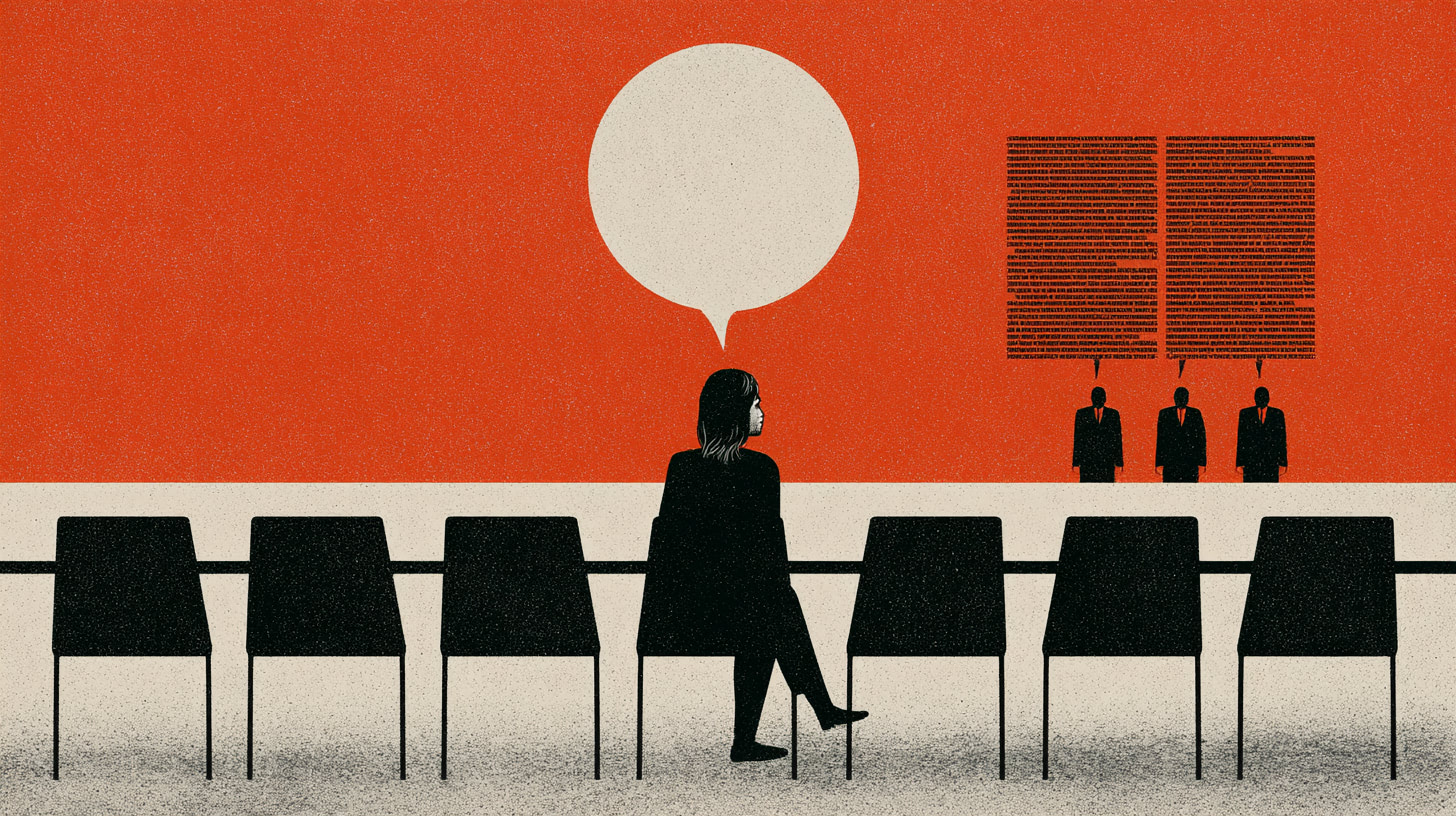
What 30 years of meeting science tells global health
Steven Rogelberg, Liana Kreamer, and Jon Gray have published a review of three decades of research on meetings in the Annual Review of Organizational Psychology and Organizational Behavior. Anyone who funds or attends convenings in global health should read it, because it settles a number of questions we have been arguing from intuition. It also…
Written by
-
Health workforce development in the Age of Intelligence: a tragedy of the cognitive commons?
Two people, both of whom I have met versions of many times. The first is a national programme manager at Nigeria’s National Primary Health Care Development Agency (NPHCDA), or at the Ghana Health Service. She is formidable. She has been through in-service training with credit points that counted toward her career progression, mid-level management modules,…
Written by
-
You cannot send an AI agent to jail: the scariest quotes from the Agentic AI Summit in Berkeley
On 1 and 2 August 2026, close to five thousand people gathered at the University of California, Berkeley for the second Agentic AI Summit, hosted by the Center for Responsible, Decentralized Intelligence. More than 1,500 companies and 250 universities were represented. The Geneva Learning Foundation (TGLF) was there. Background: The agentic AI revolution: what does…
Written by
-
Artificial intelligence for global health: a tragedy of the commons brewing in Geneva’s basement
In “The Machine in Geneva’s Basement”, Rifat Hossain sets the scene for the potential impact of artificial intelligence on the World Health Organization (WHO) with a story. A ministry official points a general-purpose assistant at WHO’s own open guidance library and has a serviceable national protocol before lunch. If this is possible, he asks, why…
Written by