global health
-
Why guidelines fail: on consequences of the false dichotomy between global and local knowledge in health systems
Global health continues to grapple with a persistent tension between standardized, evidence-based interventions developed by international experts and the contextual, experiential local knowledge held by local health workers. This dichotomy – between global expertise and local knowledge – has become increasingly problematic as health systems face unprecedented complexity in addressing challenges from climate change to…
Written by

-
Ahead of Teach to Reach 11, health leaders from 45 countries share malaria experiences in REACH network session
Nearly 300 malaria prevention health leaders from 45 countries met virtually on November 20, 2024, in parallel English and French sessions of REACH. This new initiative connects organizational leaders tackling malaria prevention and control – and other pressing health challenges – across borders. REACH emerged from Teach to Reach, a peer learning platform with over…
Written by

-
You are not alone: Health workers are sharing how they protected their communities when extreme weather hit
Today, The Geneva Learning Foundation launched a new set of “Teach to Reach Questions” focused on how health workers protect community health during extreme weather events. This initiative comes at a crucial time, as world leaders at COP29 discuss climate change’s mounting impacts on health. As climate change intensifies extreme weather events worldwide, health workers…
Written by

-
Global Health Otherwise interviews Reda Sadki
Global Health Otherwise (GHO), an informal network spearheaded by Dr Luchuo Engelbert Bain, aims to “critically dissect the meanings of decolonization of global health practice, research, and funding”. GHO spoke to The Geneva Learning Foundation’s Reda Sadki. Please tell us about yourself and your area of specialization in global health I am the founder and…
Written by
-
How can we reliably spread evidence-based practices at the speed and scale modern health challenges demand?
At a symposium of the American Society for Tropical Medicine and Hygiene (ASTMH) Annual Meeting, I explored how peer learning could help us tackle five critical challenges that limit effectiveness in global health. For epidemiologists working on implementation science, peer learning provides a new path for solving one of global health’s most persistent challenges: how…
Written by

-
Strengthening primary health care in a changing climate
A new article by Andy Haines, Elizabeth Wambui Kimani-Murage, and Anya Gopfert, “Strengthening primary health care in a changing climate,” outlines how climate change is already impacting health systems worldwide, with primary health care (PHC) workers bearing the immediate burden of response. Haines and colleagues make a compelling case for strengthening primary health care (PHC)…
Written by

-
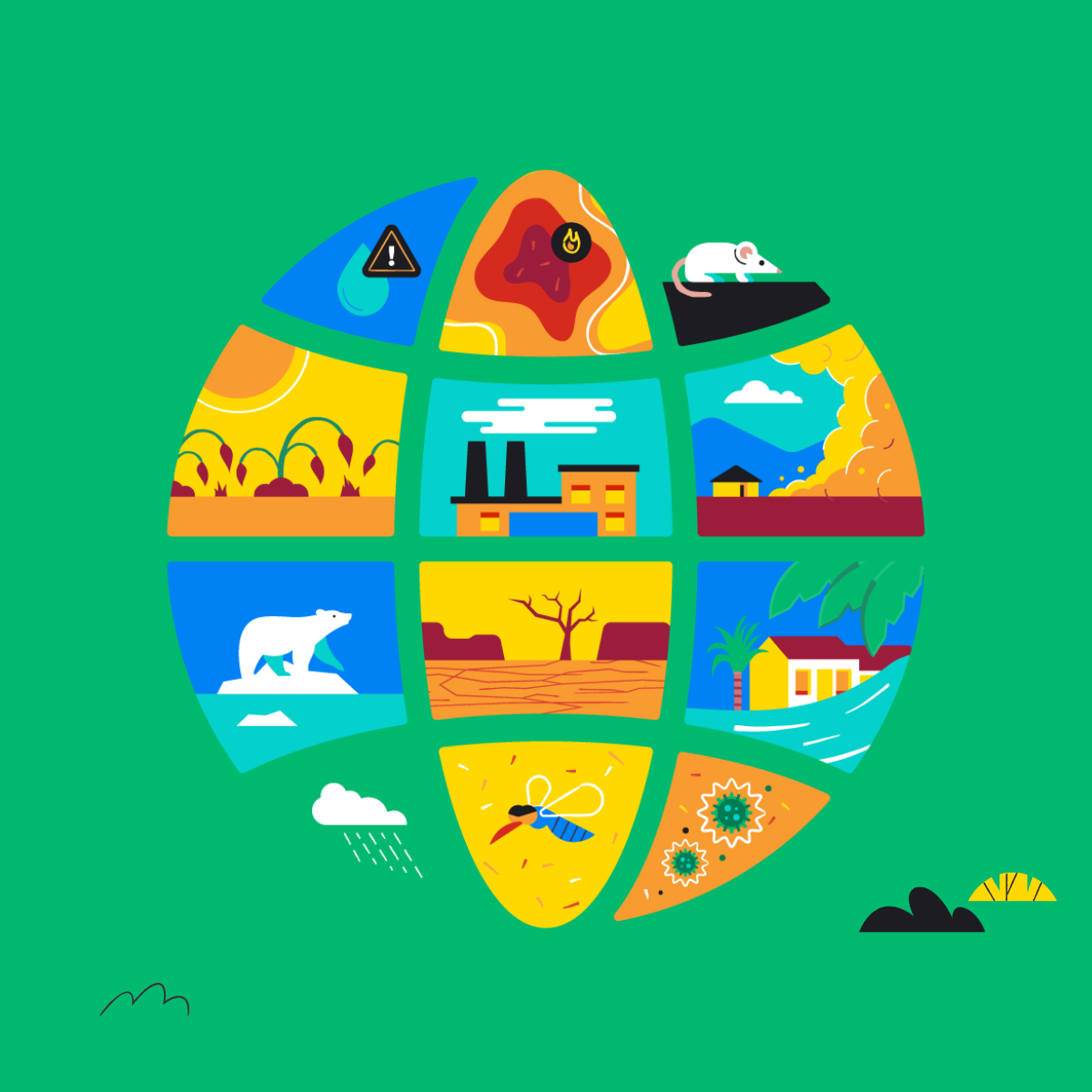
Amplifying Change: The Geneva Learning Foundation and Grand Challenges Canada Elevate Insights of the Global Health Community on Climate Impact
Geneva, Switzerland – 6 November 2024 – The Geneva Learning Foundation (TGLF) and Grand Challenges Canada (GCC) are proud to announce a new partnership that will focus on transforming insights from the local health community in low- and middle-income countries into actionable insights about the pressing health challenges posed by climate change. This collaboration aims to…
Written by
-
Teach to Reach’s new leadership network connects health organizations tackling common challenges
The Geneva Learning Foundation is launching REACH (Relate, Engage, Act, Connect, Help), a new leadership network to connect local, national, and international leaders of health organizations who are solving similar problems in different countries. Launching November 6, 2024 REACH responds to an unexpected outcome of Teach to Reach, a peer learning platform that–in less than…
Written by
-
Making connections: Ghana’s Alumni of The Geneva Learning Foundation meet in Accra
The Geneva Learning Foundation (TGLF) will host its first physical-world meeting of Ghana Scholars and Alumni on Wednesday, October 30, 2024 in Accra. Seventy-two health professionals from across Ghana’s health system will participate in the evening event. The participants include staff from the Ghana Health Service, teaching hospitals, district health directorates, and non-governmental organizations. They…
Written by

-
What is the pedagogy of Teach to Reach?
In a rural health center in Kenya, a community health worker develops an innovative approach to reaching families who have been hesitant about vaccination. Meanwhile, in a Brazilian city, a nurse has gotten everyone involved – including families and communities – onboard to integrate information about HPV vaccination into cervical cancer screening. These valuable insights might…
Written by