learning culture
-
Experiences shared at Teach to Reach 10
Before, during, and after Teach to Reach on 20-21 June 2024, 21,398 health workers across the Global South—from veteran national managers to newly-trained community health workers—shared their unfiltered, frontline experiences of delivering care in an increasingly complex world. Ahead of Teach to Reach 11, The Geneva Learning Foundation has just released the English-language collection of…
Written by

-
Why participate in Teach to Reach?
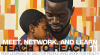
In global health, where challenges are as diverse as they are complex, we need new ways for health professionals to connect, learn, and drive change. Imagine a digital space where a nurse from rural Nigeria, a policymaker from India, and a WHO expert can share experiences, learn from each other, and collectively tackle global health…
Written by
-
Brevity’s burden: The executive summary trap in global health
It was James Gleick who noted in his book “Faster: The Acceleration of Just About Everything” the societal shift towards valuing speed over depth: “We have become a quick-reflexed, multitasking, channel-flipping, fast-forwarding species. We don’t completely understand it, and we’re not altogether happy about it.” In global health, there’s a growing tendency to demand ever-shorter…
Written by

-
The Nigeria Immunization Collaborative: Early learning from a novel sector-wide approach model for zero-dose challenges
Less than three weeks after its launch, the Nigeria Immunization Collaborative – a partnership between the Geneva Learning Foundation, the National Primary Health Care Development Agency (NPHCDA), and UNICEF – has already connected over 4,000 participants from all 36 states and more than 300 Local Government Areas (LGAs). The Collaborative is part of the Movement for…
Written by

-
Experience-sharing sessions in the Movement for Immunization Agenda 2030: A novel approach to localize global health collaboration
As immunization programs worldwide struggle to recover from pandemic disruptions, the Movement for Immunization Agenda 2030 (IA2030) offers a novel, practitioner-led approach to accelerate progress towards global vaccination goals. From March to June 2022, the Geneva Learning Foundation (TGLF) conducted the first Full Learning Cycle (FLC) of the Movement for IA2030, engaging 6,185 health professionals…
Written by

-
Learn health, but beware of the behaviorist trap
The global health community has long grappled with the challenge of providing effective, scalable training to health workers, particularly in resource-constrained settings. In recent years, digital learning platforms have emerged as a potential solution, promising to deliver accessible, engaging, and impactful training at scale. Imagine a digital platform intended to train health workers at scale.…
Written by

-
Why health leaders who are critical thinkers choose rote learning for others
Many health leaders are highly analytical, adaptive learners who thrive on solving complex problems in dynamic, real-world contexts. Their expertise is grounded in years of field experience, where they have honed their ability to rapidly generate insights, test ideas, and innovate solutions in collaboration with diverse stakeholders. In January 2021, as countries were beginning to…
Written by

-
Klepac and colleagues‘ scoping review of climate change, malaria and neglected tropical diseases: what about the epistemic significance of health worker knowledge?
By Luchuo E. Bain and Reda Sadki The scoping review by Klepac et al. provides a comprehensive overview of codified academic knowledge about the complex interplay between climate change and a wide range of infectious diseases, including malaria and 20 neglected tropical diseases (NTDs). The review synthesized findings from 511 papers published between 2010 and…
Written by

-
Five examples of double-loop learning in global health
Read this first: What is double-loop learning in global health? Example 1: Addressing low uptake of a vaccine program Single–Loop Learning: Improve logistics and supply chain management to ensure consistent vaccine availability at clinics. Double–Loop Learning: Engage with community leaders to understand cultural beliefs and concerns around vaccination, and co-design a more localized and trustworthy…
Written by

-
Learning culture: the missing link in global health between learning and performance
Learning culture is a critical concept missing from health systems research. It provides a practical and actionable framework to operationalize the notion of ‘learning health systems’ and drive transformative change. Read this first: What is double-loop learning in global health? Watkins and Marsick describe learning culture as the capacity for change. They identify seven key…
Written by