peer learning
-
Why answer Teach to Reach Questions?
Have you ever wished you could talk to another health worker who has faced the same challenges as you? Someone who found a way to keep helping people, even when things seemed impossible? That’s exactly the kind of active learning that Teach to Reach Questions make possible. They make peer learning easy for everyone who…
Written by

-
How can we reliably spread evidence-based practices at the speed and scale modern health challenges demand?
At a symposium of the American Society for Tropical Medicine and Hygiene (ASTMH) Annual Meeting, I explored how peer learning could help us tackle five critical challenges that limit effectiveness in global health. For epidemiologists working on implementation science, peer learning provides a new path for solving one of global health’s most persistent challenges: how…
Written by

-
Anecdote or lived experience: reimagining knowledge for climate-resilient health systems
A health worker in rural Kenya notices that malaria cases are appearing earlier in the season than usual. A nurse in Bangladesh observes that certain neighborhoods are experiencing more heat-related illnesses despite similar temperatures. These observations often remain trapped in the realm of “anecdotal evidence.” The dominant epistemological framework in public health traditionally dismisses such…
Written by

-
Teach to Reach’s new leadership network connects health organizations tackling common challenges
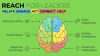
The Geneva Learning Foundation is launching REACH (Relate, Engage, Act, Connect, Help), a new leadership network to connect local, national, and international leaders of health organizations who are solving similar problems in different countries. Launching November 6, 2024 REACH responds to an unexpected outcome of Teach to Reach, a peer learning platform that–in less than…
Written by
-
What is the pedagogy of Teach to Reach?
In a rural health center in Kenya, a community health worker develops an innovative approach to reaching families who have been hesitant about vaccination. Meanwhile, in a Brazilian city, a nurse has gotten everyone involved – including families and communities – onboard to integrate information about HPV vaccination into cervical cancer screening. These valuable insights might…
Written by

-
Experiences shared at Teach to Reach 10
Before, during, and after Teach to Reach on 20-21 June 2024, 21,398 health workers across the Global South—from veteran national managers to newly-trained community health workers—shared their unfiltered, frontline experiences of delivering care in an increasingly complex world. Ahead of Teach to Reach 11, The Geneva Learning Foundation has just released the English-language collection of…
Written by

-
Support of children affected by the humanitarian crisis in Ukraine: Bridging practice and learning through the sharing of experience
“Do you have an experience supporting children affected by the humanitarian crisis in Ukraine that you would like to share with colleagues? Tell us what happened and how it turned out. Be specific and detailed so that we can understand your story.” This was one of the questions that applicants to the Certificate peer learning…
Written by

-
Why become a Teach to Reach Partner?
We need new ways to tackle global health challenges that impact local communities. It is obvious that technology alone is not enough. We need human ingenuity, collaboration, and the ability to share across borders and boundaries. That is why I am excited about Teach to Reach. Imagine if we could tap into the collective intelligence…
Written by
-
Can Teach to Reach help your organization?
Teach to Reach stands as a unique nexus in the global health landscape, offering unprecedented opportunities for diverse stakeholders to engage, learn, and drive meaningful change. With over 60,000 participants from more than 90 countries, this platform, network, and community bring together a mix of frontline health workers, policymakers, and key decision-makers. At Teach to…
Written by
-
Why participate in Teach to Reach?
In global health, where challenges are as diverse as they are complex, we need new ways for health professionals to connect, learn, and drive change. Imagine a digital space where a nurse from rural Nigeria, a policymaker from India, and a WHO expert can share experiences, learn from each other, and collectively tackle global health…
Written by