Thematic areas
-
What is the value of strategy in the middle of a global crisis?
A new global vision and strategy titled ‘Immunization Agenda 2030: A Global Strategy to Leave No One Behind (IA2030)’ was endorsed by the World Health Assembly less than a year before the World Health Organization declared COVID-19 a Public Health Emergency of International Concern. Today, the cumulative tension of both urgent and longstanding challenges is stretching…
Written by

-
Now is not everything
“Everything is now. Knowledge flows in real time. Global conversations are no longer restricted by physical space. The world has become immediate.” – George Siemens in Knowing Knowledge (2006) Twenty Key Contributors have now joined the Geneva Learning Foundation’s monthly Dialogue on learning, leadership, and impact. They include: Laura Bierema, Emanuele Copabianco, Nancy Dixon, Katiuscia Fara,…
Written by

-
On learning, leadership, and impact: a new kind of dialogue to tackle the challenges that threaten our societies
The Geneva Learning Foundation’s new Dialogue is an invitation-only global conversation exploring learning, leadership, and impact. Our aim is to explore new ways to connect individuals who are tackling the challenges that threaten our societies. In the past, one observation has been that conversations around learning and leadership tend to happen between nearly-identical peers. One…
Written by

-
Two false dichotomies: quality vs. quantity and peer vs. global expertise
The national EPI manager of the Expanded Programme for Immunization (EPI) of the Democratic Republic of the Congo (DRC), just addressed the COVID-19 Peer Hub Teams from DRC and Ivory Coast, saluting both teams for their effort to prepare and strengthen COVID-19 vaccine introduction. I am honored to have been invited and pleased to see…
Written by
-
What does the changing nature of knowledge mean for global health?
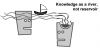
Charlotte Mbuh and I will be welcoming Julie Jacobson, one of the founders of Bridges to Development, for our 15-minute Global Health Symposium about neglected needs of women’s health, and specifically the upcoming Female Genital Schistosomiasis (FGS) workshop being organized by the FAST package, a group of international and country partners. Join the Symposium on…
Written by
-
Learning, leadership, and impact in the Digital Age: In dialogue with Karen Watkins
Listen in on the Foundation’s first invitation-only Clubhouse chat. Karen Watkins and I chatted about the Foundation’s unique approach to this triptych of learning, leadership, and impact in the Digital Age. We shared some of the insights we gained about resilience during the first year of COVID-19, learning from the Foundation’s immunization programme that connected…
Written by
-
Disseminating rapid learning about COVID-19 vaccine introduction
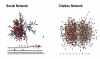
In July 2019, barely six months before the pandemic, we worked with alumni of The Geneva Learning Foundation’s immunization programme to build the Impact Accelerator in 86 countries. This global community of action for national and sub-national immunization staff pledged, following completion of one of the Foundation’s courses, to support each other in other to…
Written by
-
Solidarity across public health and medicine silos during a pandemic
We are launching a new Scholar programme about environmental threats to health, with an initial focus on radiation. (I mapped out what this might look like in 2017.) As part of the launch, we are enlisting support of immunization colleagues. Our immunization programme is our largest and most advanced programme, and still growing fast since…
Written by
-
When learning meets emergency: The Geneva Learning Foundation’s approach to crisis response
This article is based on Zapnito CEO Charles Thiede’s interview of Reda Sadki on 16 September 2019. “I knew we had hit gold when a young doctor in Ghana was able to turn what he learned into action – and get results that improved the health outcome prospects of every pregnant woman in his district –…
Written by

-
Digital health: The Geneva Learning Foundation to bring AI-driven training to health workers in 90 countries
GENEVA, 23 April 2019 – The Geneva Learning Foundation (GLF) is partnering with artificial intelligence (AI) learning pioneer Wildfire to pilot cutting edge learning technology with over 1,000 immunization professionals in 90 countries, many working at the district level. British startup Wildfire, an award-winning innovator, is helping the Swiss non-profit tackle a wicked problem: while…
Written by