climate and health
-
Journée mondiale contre le paludisme: nous avons besoin de nouvelles façons de mener le changement
English version | Version française Aujourd’hui, à l’occasion de la Journée mondiale contre le paludisme, la Fondation Apprendre Genève est fière de se tenir aux côtés des travailleurs de la santé en première ligne dans la lutte contre cette maladie. Le paludisme reste un problème de santé majeure, affectant de manière disproportionnée les communautés d’Afrique…
Written by
-
World Malaria Day: We need new ways to support health workers leading change with local communities
English version | Version française Today, on World Malaria Day, the Geneva Learning Foundation is proud to stand with health workers on the frontlines of the fight against this deadly disease. Malaria remains a critical global health challenge, disproportionately affecting communities in Africa and Asia. That’s why we’re putting malaria at the heart of the…
Written by
-
Climate change and health: perspectives from developing countries
Today, the Geneva Learning Foundation’s Charlotte Mbuh delivered a scientific presentation titled “On the frontline of climate change and health: A health worker eyewitness report” at the University of Hamburg’s Online Expert Seminar on Climate Change and Health: Perspectives from Developing Countries. Mbuh shared insights from a report based on observations from frontline health workers…
Written by
-
Making the invisible visible: storytelling the health impacts of climate change
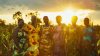
On March 18, 2024, the Geneva Learning Foundation (TGLF) hosted a workshop bringing together 553 health workers from 55 countries with TGLF’s First Fellow of Photography and award-winning photographer Chris de Bode. Watch the workshop in English and in French. Poor connectivity? Get the audio-only podcast. The dialogue focused on exploring the power of health workers…
Written by
-
Visual storytelling for health
Do you work for health? Your are invited to a visual storytelling workshop with health care workers from 44 countries. The Geneva Learning Foundation’s first Fellow of Photography, Chris de Bode, will lead this workshop. 544 health care workers from 44 countries have already confirmed their participation. 80% of participants are sub-national staff working in…
Written by
-
Women’s voices from the frontlines of health and humanitarian action
English version | Version française GENEVA, Switzerland, 8 March 2024 – The Geneva Learning Foundation (TGLF) is sharing a collection of stories titled “Women inspiring women”, shared by 177 women on the frontlines of health and humanitarian action. Download: The Geneva Learning Foundation. (2024). Women inspiring women: International Women’s Day 2024 (1.0). https://doi.org/10.5281/zenodo.10783218 The collection…
Written by

-
Become a Teach to Reach 10 Partner: Help amplify frontline voices at the world’s largest health peer learning event
The Geneva Learning Foundation is pleased to announce the tenth edition of Teach to Reach, to be held 20-21 June 2024. Teach to Reach is a massive, open peer learning event where health professionals network, and learn with colleagues from all over the world. Request your invitation… Teach to Reach 10 continues a tradition of…
Written by
-
The imperative for climate action to protect health and the role of education
“The Imperative for Climate Action to Protect Health” is an article that examines the current and projected health impacts of climate change, as well as the potential health benefits of actions to reduce greenhouse gas emissions. The authors state that “climate change is causing injuries, illnesses, and deaths, with the risks projected to increase substantially…
Written by
-
Climate change is a threat to the health of the communities we serve: health workers speak out at COP28
The Geneva Learning Foundation’s Charlotte Mbuh spoke today at the COP28 Health Pavilion in Dubai, United Arab Emirates (UAE). Watch the speech at COP28… Good afternoon. I am Charlotte Mbuh. I have worked for the health of children and families in Cameroon for over 15 years. I am one of more than 5,500 health workers…
Written by

-
Investing in the health workforce is vital to tackle climate change: A new report shares insights from over 1,200 on the frontline
Geneva, Switzerland (1 December 2023) – The Geneva Learning Foundation has published a new report titled “On the frontline of climate change and health: A health worker eyewitness report.” The report shares first-hand experiences from over 1,200 health workers in 68 countries who are first responders already battling climate consequences on health. As climate change intensifies…
Written by