Blog
-
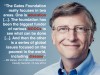
Bill Gates on education, MOOCs, poverty and disease
This quote is not new. Given the increasing focus of MOOC debates on corporate MOOCs, it is interesting because bridging gaps in knowledge and skills is needed to address global health and poverty gaps. However, these twin strands of the Gates Foundation have, so far, been led by separate teams.
Written by
-
Back to London on Thursday to talk learning strategy for humanitarian and development organizations
I’m looking forward to being back in London on Thursday 13 March for People In Aid’s Learning & Development network meeting. This group meets four times a year to discuss issues in which there is a shared interest across organizations. Previous topics have covered how to “measure” learning or the design of competency frameworks, for…
Written by

-
Scaling up humanitarian education: my presentation at the European MOOC Summit
I’ve just published my presentation (25 minutes with slides) about the urgency of scaling up humanitarian education on LSi.io. This is a recording with both slides and my narrative, that looks at a number of issues: Training like it’s 1899 – and why we need to think about learning beyond training The need for scale…
Written by

-
Meet Barbara Moser-Mercer, the lady who did MOOCs in a refugee camp
I first heard her described as the “lady who did MOOCs in a refugee camp”. It was completely ambiguous what that meant, but certainly sparked my curiosity. Barbara Moser-Mercer is a professor at the University of Geneva and a cognitive psychologist who has practiced and researched education in emergencies. I finally caught up with her…
Written by

-
MOOCs for international and nongovernmental organizations
International organizations already deliver training at a massive scale, but they do it mostly the old-fashioned way – one workshop at a time. The urgency of scaling up learning, education and training (LET) is real: with 320 million people affected by climate change-related disasters in 2015, 30 million deaths from non-communicable diseases (NCDs), and many…
Written by
-
LSi.io interviews Plan B’s Donald Clark: Universities and humanitarian organizations in the Age of Disruption
Donald Clark is an education innovator with no institutional ties to refrain him from telling it like it is. He answers three questions from LSi.io‘s Reda Sadki: Zach Sims at Davos referred to university brick-and-mortar structures as the “detritus” of a bygone area. Agree or disagree? We all remember Sebastian Thrun’s predictions about the impending…
Written by

-
European MOOC Summit: What looks tasty – for organizations thinking about transforming how they learn
This is a quick overview of what I found of interest for international and non-governmental organizations in the program of the Second European MOOC Summit – possibly the largest and probably the most interesting MOOC-related event on the Old Continent – that opens tomorrow at Switzerland’s MIT-by-the-Lake, EPFL. The first interesting thing I found in the…
Written by
-
Learning beyond training, to survive and grow
Humanitarian organizations already organize and deliver training on a massive scale. For example, the Red Cross and Red Crescent train 17 million people each year to practice life-saving first aid, in addition to the training of its 13.6 million active volunteers. Training has been tacitly accepted as the primary mechanism to prepare volunteers and staff…
Written by

-
Learning Technologies in London and European MOOCs in Lausanne
My feet hurt. I’ve just returned from a week-long trip for LSi.io pounding the pavements of London and Oxford, meeting 26 humanitarian, academic, and corporate people in four days. I wish to thank every organization and individual who took the time to welcome me and share thoughts, insights, and experiences. The common thread is that all…
Written by

-
Quality in humanitarian education
Humanitarian education is a huge undertaking. Each year, for example, 17 million trainees learn first-aid skills through face-to-face (FTF) training programmes run by the 189 National Red Cross and Red Crescent Societies worldwide. People of varied educational backgrounds join their local Red Cross or Red Crescent branch because they want to learn how to do…
Written by