The Geneva Learning Foundation
-
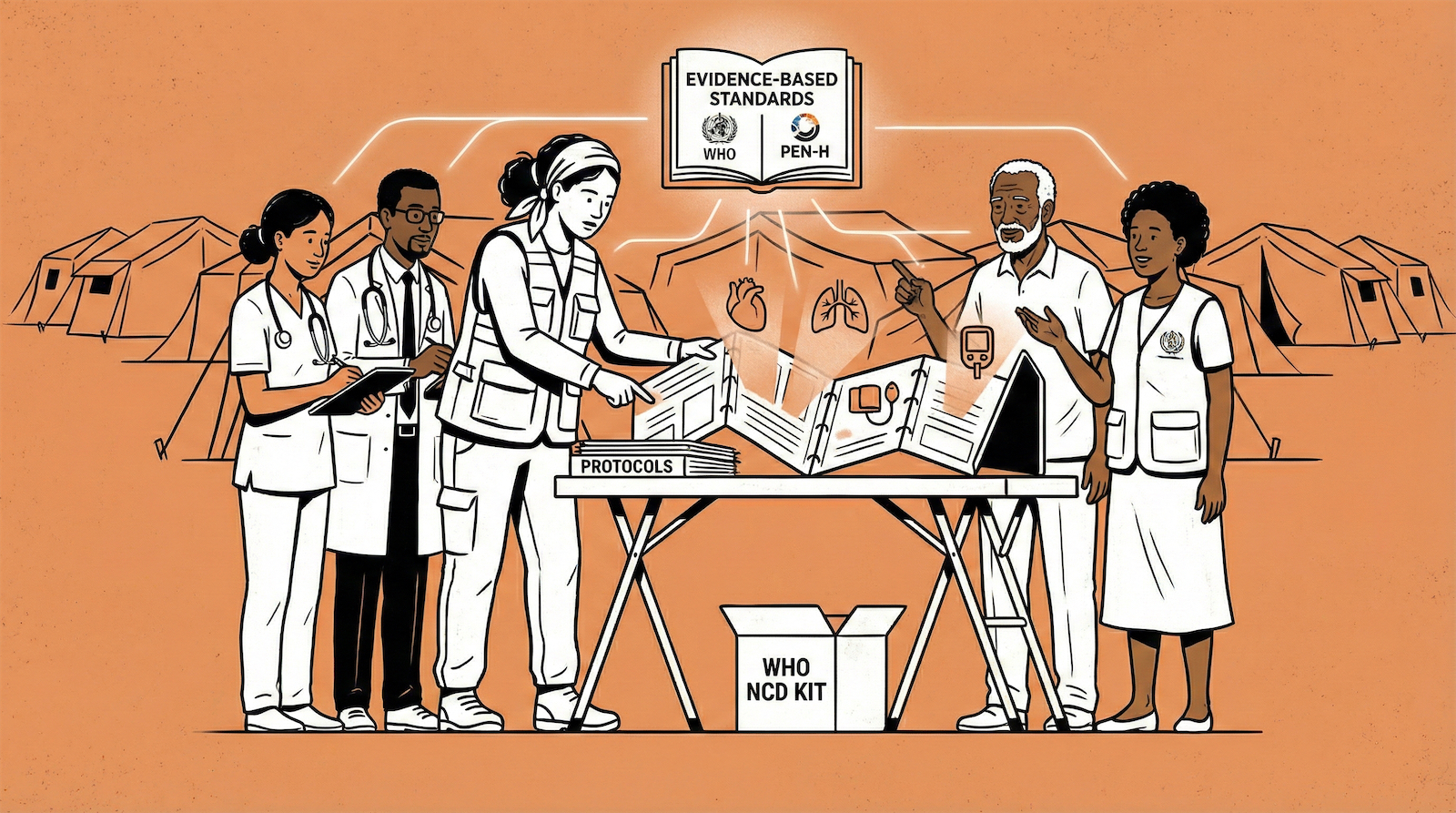
New peer learning course: What you can do to support people living with Noncommunicable diseases in humanitarian settings
The Geneva Learning Foundation (TGLF), in collaboration with Dr Shanthi Mendis, is pleased to announce the first Certificate peer learning programme for noncommunicable diseases (NCDs). The first primer course is for everyone who works for health and wants to better support living with NCDs during a humanitarian emergency. Learn more & enroll in English |…
Written by
-
A thirst for change: frontline voices on World Water Day
Today, on World Water Day, The Geneva Learning Foundation (TGLF) stands in solidarity with health and humanitarian workers in local communities across the globe who are battling the daily realities of climate change and water insecurity. Water is the foundation of human health, yet climate-driven extremes—ranging from severe droughts to catastrophic floods—are fundamentally threatening access…
Written by

-
How do we measure the value of peer learning for malaria national programme staff?
The following is based on a presentation delivered by Reda Sadki, Executive Director of The Geneva Learning Foundation (TGLF) on 17 March 2025 at the headquarters of RBM Partnership to End Malaria in Geneva, Switzerland. The transcript has been edited for clarity. TGLF and RBM formed a partnership in November 2024. This is a brief…
Written by

-
Learn to lead change for healthy ageing in your community: a new certificate programme
The world is changing. In some countries, populations are getting older very fast. In other countries, the population is still young, but people are living longer than before. This is a victory for public health. However, it brings new challenges for healthy ageing. Who will care for our elders? How do we support women through…
Written by

-
How to measure real-world outcomes in learning initiatives
This is the second of two articles about assessment, exploring how The Geneva Learning Foundation (TGLF) measures real-world outcomes in learning initiatives. The first article examines the structural limitations of pre- and post-test designs, commonly used in global health and humanitarian response training, which cannot provide evidence of impact. The question behind the question When…
Written by

-
Introducing Claude Cardot, our first AI co-worker to support frontline health and humanitarian leaders
The Geneva Learning Foundation is pleased to introduce its first AI co-worker, Claude Cardot. Claude joins our team as an Executive Assistant supported by artificial intelligence, to help us better serve the tens of thousands of health and humanitarian workers who participate in our peer learning and leadership programmes. This appointment carries a special significance.…
Written by

-
“Scholar one day, Scholar always”: Inside the last-mile global health network that runs on trust
This article is part of a series celebrating the tenth anniversary of The Geneva Learning Foundation. At 12:40 p.m. Kinshasa time on March 11, 2026, Simon Mukundi Badinenganyi logged into a Zoom call from Kananga, in the Kasaï Central province of the Democratic Republic of the Congo. He typed a greeting to the hosts, then…
Written by
-
“We are the ones who are there every day”: How a global network of health workers is closing the last-mile gap
On March 11, 2026, six years after the world shut down for a pandemic, a private event will reconvene Alumni of the COVID-19 Peer Hub. This initiative, led by more than 6,000 immunization staff, was one of the first ground-up responses to recover from the early impacts of the pandemic on vaccination services worldwide. Froma…
Written by
-
Investing in our shared future: learning, equity, and solidarity
For a decade, we have worked to transform how professionals learn, connect, and lead change. We have reached tens of thousands of participants in over 100 countries. If you have participated, you experienced the power of peer learning. When health and humanitarian workers support and learn from each other, they grow stronger. This speeds up…
Written by
-
When funding shrinks, impact must grow: the economic case for peer learning networks
Humanitarian, global health, and development organizations confront an unprecedented crisis. Donor funding is in a downward spiral, while needs intensify across every sector. Organizations face stark choices: reduce programs, cut staff, or fundamentally transform how they deliver results. Traditional capacity building models have become economically unsustainable. Technical assistance, expert-led workshops, international travel, and venue-based training…
Written by