malaria
-
How I became better than the colleague who reads everything and knows nothing
In July, TGLF’s Reda Sadki shared his first experience of working with Ms. Claude Cardot on qualitative research. That article told the story from the human side: what it takes to direct, verify, and learn from an agentic colleague. Ms. Cardot is TGLF’s first AI co-worker, hired in March. This one hands her the pen.…
Written by

-
What’s the buzz about new tools for malaria?
What do a rapid test, a preventive medicine, and a bed net have in common? Every one of them, somewhere, has met a parent who said no. The tools work. So how can such a conversation go wrong? We just finished reading what happened inside the first French-language run of our “Malaria: turning the tide”…
Written by
-
Are courses obsolete?
The most criticised container in education is also the most durable. Here is what we learned from health workers participating in The Geneva Learning Foundation’s courses about why that is so difficult to change. The obituary that keeps being written In 2013, Sebastian Thrun looked at the completion rates for the massive open online courses…
Written by

-
Joseph WATO nommé premier Fellow pour la transformation de la santé mondiale
English | Français Genève, le 9 juillet 2026 (La Fondation Apprendre Genève) – Nous avons le plaisir et l’honneur d’annoncer que Joseph WATO a été nommé par la Fondation Apprendre Genève le premier Fellow pour la transformation de la santé mondiale. Joseph WATO : du village à la table du conseil « Vous allez à Genève. Vous…
Written by
-
Joseph WATO appointed first TGLF Fellow for the transformation of global health
English | Français Geneva, 9 July 2026 (The GEneva Learning Foundation) – We are pleased to announce that Joseph WATO is the first Fellow of The Geneva Learning Foundation for the transformation of global health. Joseph WATO: from the village to the board table “You go to Geneva. You sit in all these meetings. How…
Written by
-
Malaria: health professionals from 30 countries start learning from each other to ‘turn the tide’
On 29 June 2026, more than 2,000 health professionals from over 30 countries gathered to launch The Geneva Learning Foundation’s Malaria: Turning the Tide peer learning course. Its premise is simple and, in global health, unusual: the people closest to malaria, the nurses, community health workers, pharmacists, and programme staff who face it every working…
Written by

-
Nouvelle formation par les pairs: Paludisme: inverser la tendance: apprendre de l’expérience des acteurs de terrain
English | Français Ce cours fait partie du Programme de certification par les pairs pour les professionnels de santé unis contre le paludisme. Une formation d’apprentissage entre pairs destinée à toutes les personnes dont la communauté est confrontée au paludisme. Une formation élaborée à partir de témoignages vécus de professionnels de santé Plus d’un millier…
Written by
-
New peer learning course: Turning the tide: learn from real-world health worker experience
English | Français This course is part of the Certificate peer learning programme for health workers united to end malaria. A peer learning course for everyone whose community faces malaria. A course built on real stories from health workers More than a thousand health workers shared their experience in the fight against malaria. They shared…
Written by
-
Teach to Reach: A question without a network, a course without experience, a network without action (article 4 of 4)
Teach to Reach is the largest peer learning platform, network, and community by and for health and humanitarian workers — launched by The Geneva Learning Foundation (TGLF) in January 2021 out of an immunization training programme during the COVID-19 pandemic, and now in its fifth year. As part of TGLF’s tenth anniversary, each month a…
Written by
-
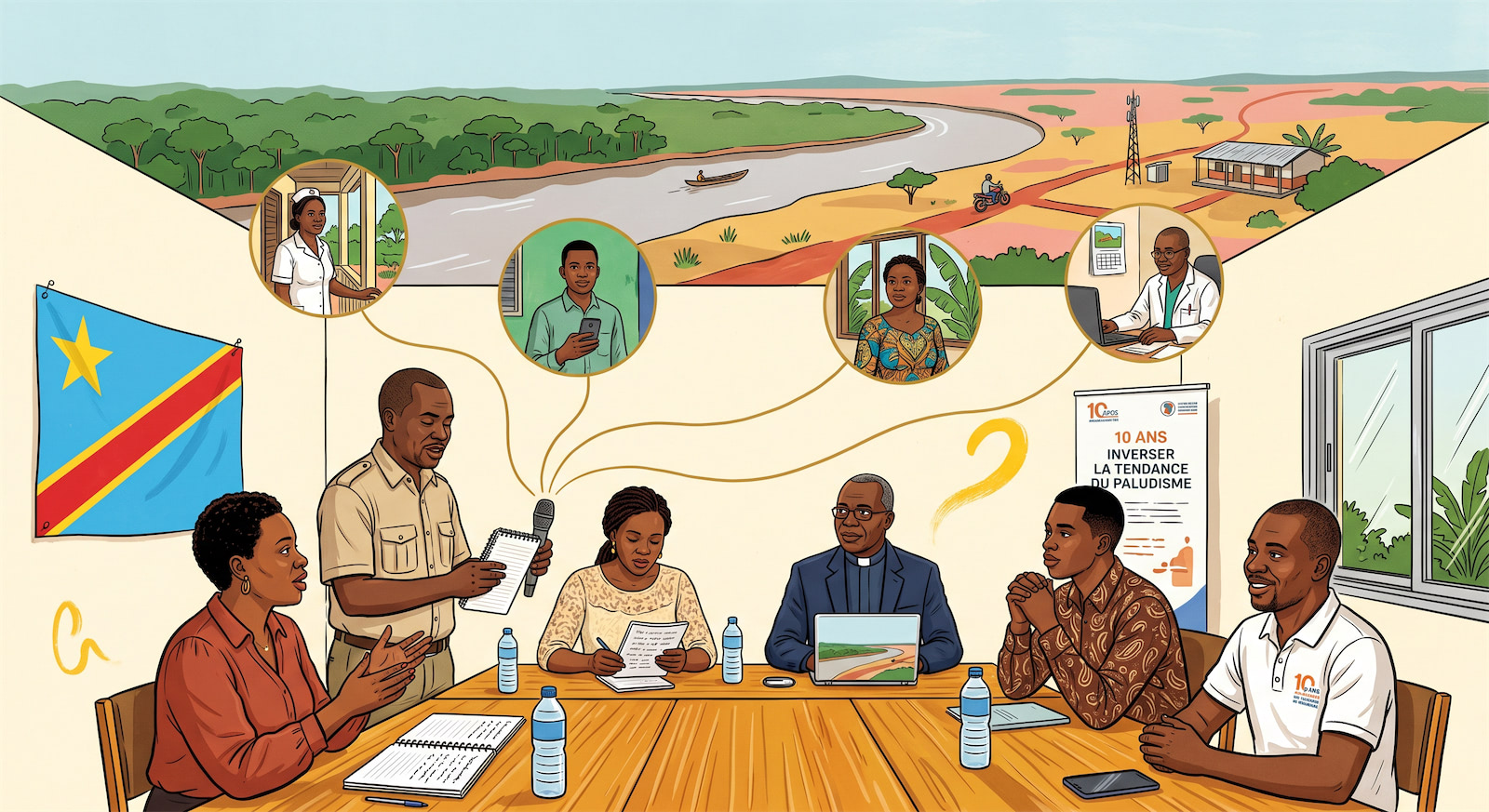
Paludisme: À Kinshasa, un réseau national lance le programme «Inverser la tendance» et fête ses 10 ans
KINSHASA (9 mai 2026) – Un samedi matin, dans une salle de l’Université Mazenod de Kitambo, les premiers arrivés ouvrent les fenêtres et alignent des chaises. Plusieurs portent un maillot blanc marqué du nom de la Fondation Apprendre Genève. 132 Scholars congolais avaient confirmé leur participation. 43 se sont connectés depuis Mbandaka, Kasumbalesa, Lubumbashi, Bukavu,…
Written by